
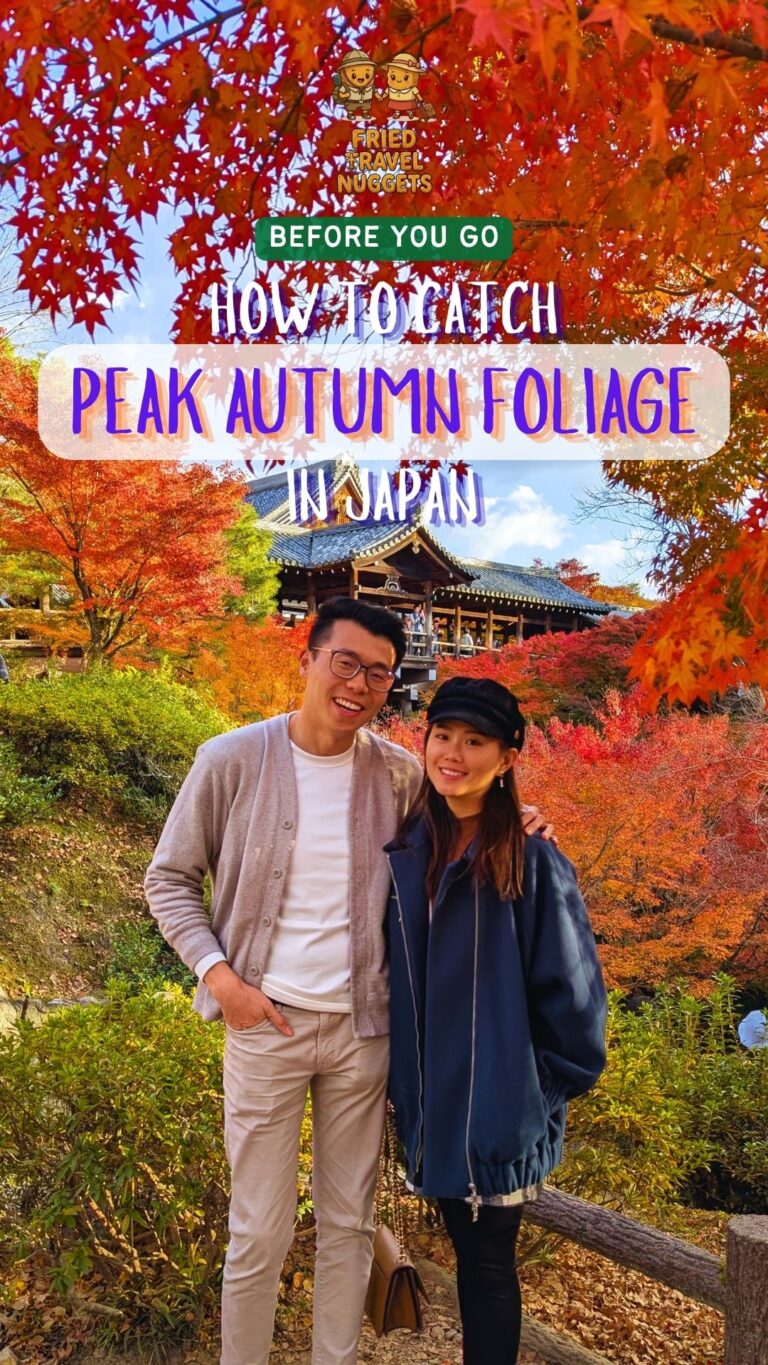
- Tohoku peaks roughly 2–3 weeks before Tokyo and Kyoto — mid-to-late October at higher elevations, early November lower down.
- Color moves north-to-south and high-to-low: start in the mountains (Hachimantai, Naruko Gorge), then chase it downhill as it fades up top.
- Sendai makes the best base — it puts Naruko Onsen, Matsushima, and Yamadera all within a day trip.
- Weekday visits to Naruko Gorge avoid the worst of the bus-tour crowds; weekends can mean 45+ minute waits for the ropeway.
Tohoku doesn’t get the crowds Kyoto does every November — which is exactly why it’s worth the extra shinkansen ride. Here’s the timing pattern, the towns worth basing in, and the spots that make this region worth a dedicated autumn trip.
Why Tohoku’s window is different
Most first-time autumn trips to Japan default to Kyoto or Nikko, both of which peak in mid-to-late November and get correspondingly packed. Tohoku’s higher elevation and more northern latitude means color arrives two to three weeks earlier — late September in the mountains, working down to early November near sea level. That earlier window also means thinner crowds.
The north-to-south, high-to-low pattern
Hachimantai & Naruko Gorge — late Sept to mid-October
Start in the mountains. Hachimantai’s Aspite Line hits peak color first, usually the last week of September through the first week of October, followed closely by Naruko Gorge’s ravine walk — the single most photographed foliage spot in the region, and worth timing on a weekday.
Sendai, Matsushima & Yamadera — mid-October to early November
As the mountains fade, color moves into the lowland towns. Yamadera’s mountain temple stairs (all 1,000 of them) are worth the climb specifically for the view over red-and-gold hillsides; Matsushima’s pine-covered islands pair foliage with a coastline you won’t find further south. Sendai itself — the region’s biggest city — is the practical hub tying all of this together.
Where to base yourself
Sendai is the obvious pick: it’s the only shinkansen stop in the region, has the widest range of hotels, and puts everything above within 60-90 minutes. If you’d rather sleep closer to the color, Naruko Onsen has hot-spring ryokan right at the gorge entrance — fewer amenities, but you skip the morning bus-tour rush entirely.
Map: hotels, food & viewpoints
Practical timing notes
Foliage forecasts shift year to year by about a week in either direction, so treat the dates above as a planning baseline, not a guarantee — we’ll update this guide as each season’s official forecasts are released. If you’re building a wider Tohoku-to-Tokyo itinerary, a JR Pass covering the Tohoku Shinkansen usually pays for itself after two or three legs.
None of this is set-and-forget — peak color moves around a bit every year, and we’re tracking it as each region’s forecast firms up.
This started as a nugget — see the short version →